


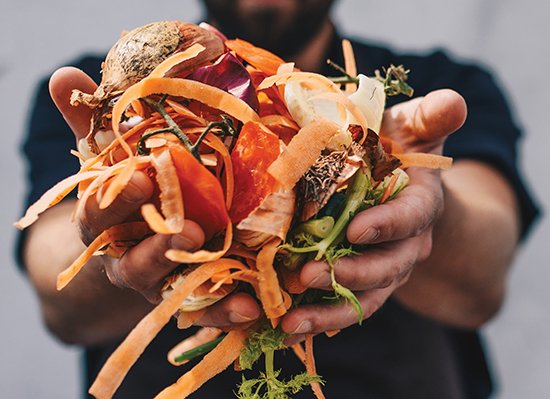
Previously, we have talked about some of the areas in which we at Triscan work with sustainability. Most often, it is the most conspicuous areas that become the subject of a project. What initiatives and investments can we make to save on heat, electricity and material consumption. But this time we have plunged ourselves into food consumption - or rather what is left over.
Organic waste is valuable. It can be converted to CO2-neutral biogas and the residual waste is used for fertilizer. At Triscan in Brabrand, employees are offered a lunch arrangement. A catering company delivers a lunch buffet every day, which is displayed in the canteen. The employees are responsible for tidying up the porcelain, cutlery and glass that they have used. Previously, the individual employee's food waste and food waste from the buffet were generally not sorted but disposed of as ordinary waste.
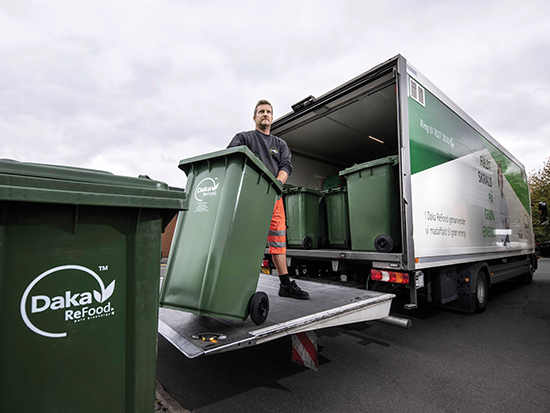
After we at Triscan have joined the Daka ReFood deal, the waste is sorted. Food waste is disposed in a separate container, which thereafter is emptied into a special waste container, that is put at our disposal and collected by Daka ReFood. But can it really pay off? The short answer is YES! The ReFood deal:
- Has a negative CO2 footprint because more energy is produced than consumed
- Ensures that food waste does not go to combustion, but is instead recycled
- Collection takes place in a way that ensures loaded trucks and the least possible driving
- Has a nudging effect, which means that companies affiliated to the deal reduce their food waste by an average of 16%
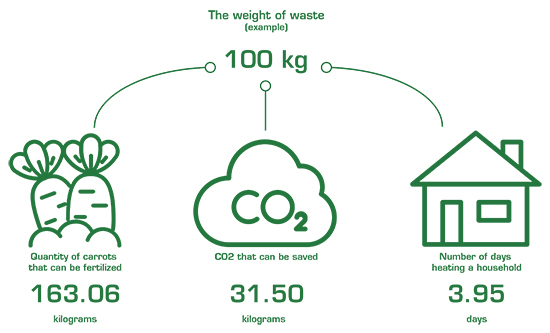
The model below shows how much 100 kg of food waste can contribute in relation to fertilizer, savings in CO2 and heating.
Daka ReFood is a Danish company that operates exclusively in Denmark. The available information about their service is therefore unfortunately only available in Danish at www.refood.dk